


Most people crossing into Colombia from Equator take a taxi straight to Ipiales, where the closest bus terminal is located. But what most people don’t realize is that only few miles farther is one of South America’s most beautiful and unique churches, Las Lajas Basilica.
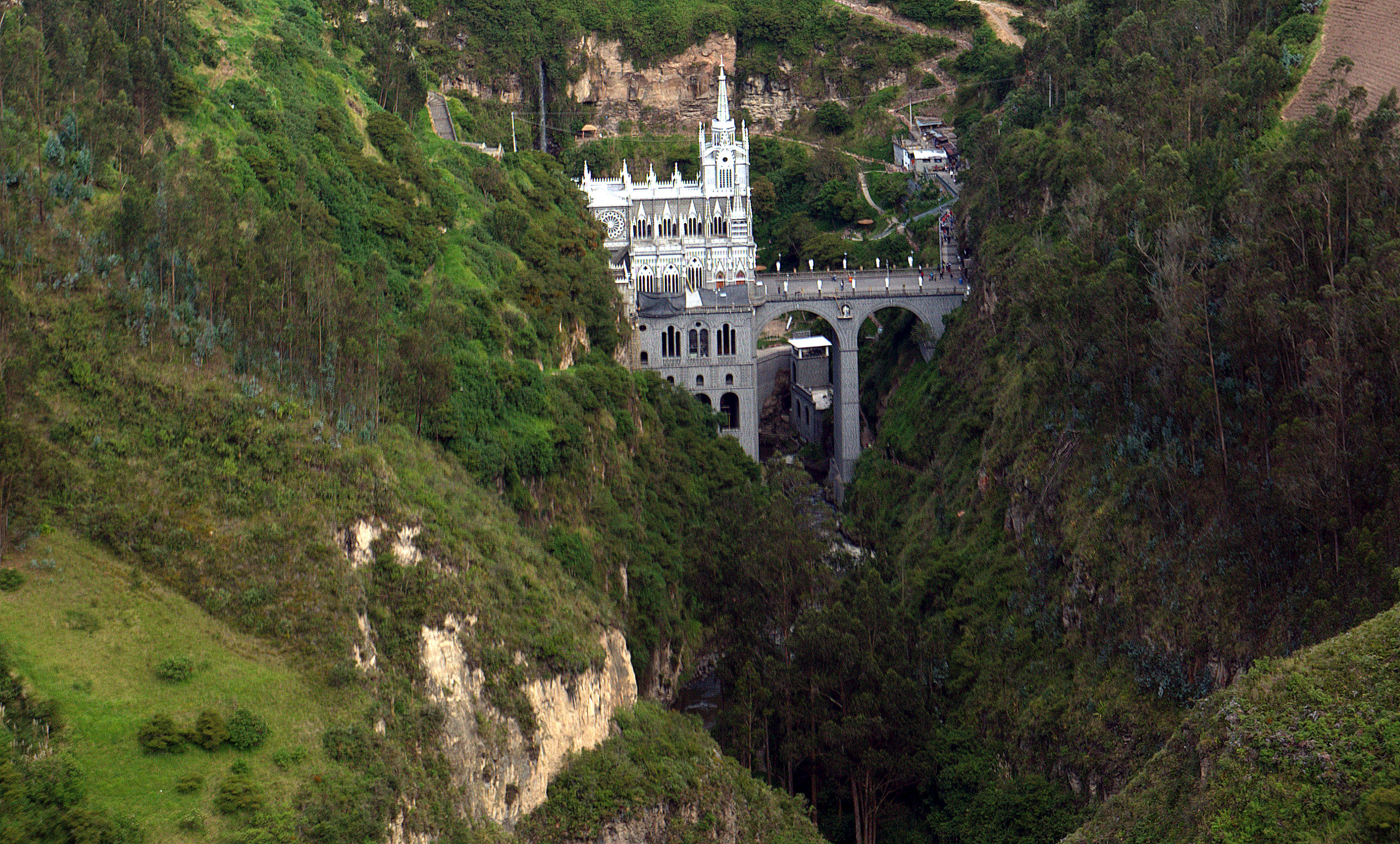
Las Lajas Basilica
The Basilica is not only a church but also a Marian Shrine. Built to encase a small grotto that contains a miraculous image of the Virgin Mary. The image is said to have imprinted on the grotto’s wall after an apparition of the Virgin Mary was seen there. Think Virgin Mary toast but more legit, and way more beautiful.
Our cab driver was thrilled when Ben and I told him to take us to Las Lajas instead of Ipiales. Not only did he end up charging us a rate that would put a NYC cab meter to shame. He was genuinely proud of the church. Explaining to us in Spanglish that the church had been built solely from donations given by devotees and that it is an important pilgrimage site for the Colombian people. He even pulled over a few times so we could get sweeping pictures of the Colombian countryside and the church.
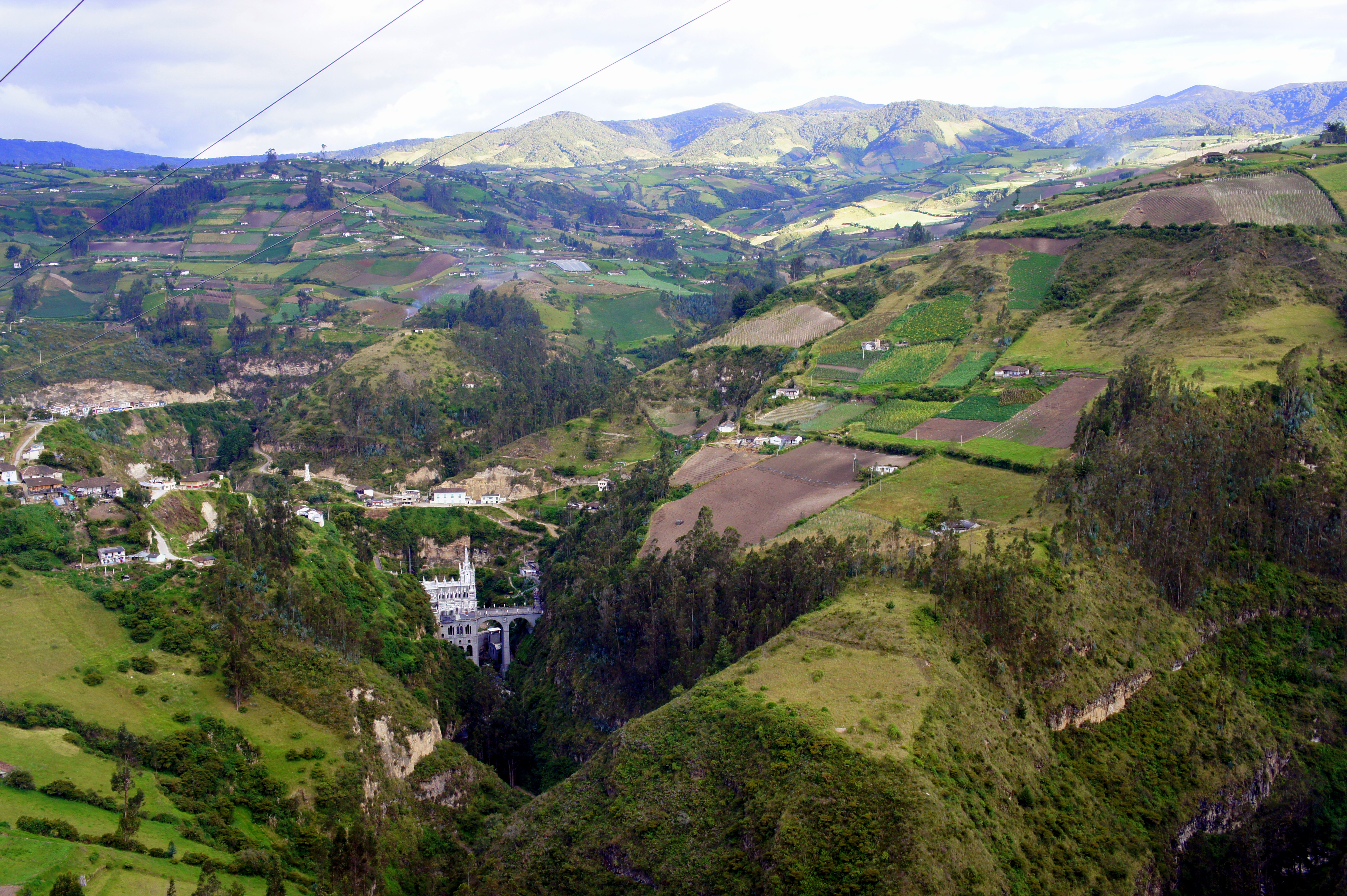
On our Way. Sweeping view from the side of the road.
We decided to drop off our bags at our hostel, Casa Pastoral, before exploring the church and surrounding areas. Casa Pastoral was an easy choice. Not only did it seem like the only option in town, it was less then $10 USD a night for both of us and had an incredible view of the church and casacada (waterfall).
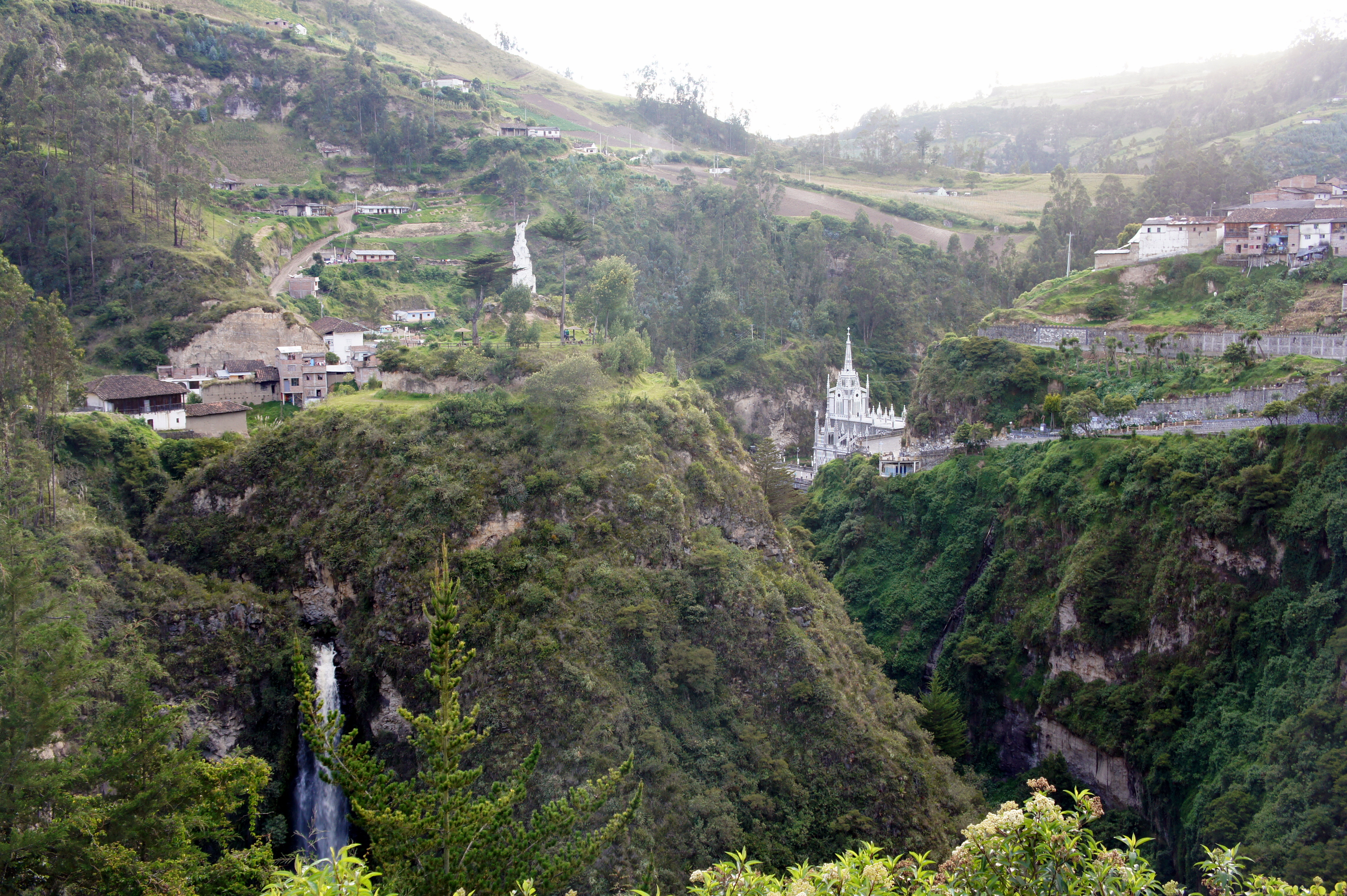
View from Casa Pastoral
We soon found out that Casa Pastoral is not a hostel but a monastery that allows travelers to stay in empty nun dormitories. Ben and I are not married and not catholic. So I don’t know exactly how many rules we broke regarding sharing a nun dormitory in a monastery without being joined in holy matrimony, but I figured it was a few. So when we had to walk through a small chapel to get to our room, I was just happy we didn’t burst into flames.
To get to the Basilica, we followed a cobble stone path that starts just a few feet from Casa Pastoral and continues around of the deep gorge of the Guaitara River. The path is plastered with plaques giving thanks to the Virgin for the miracles she has worked in the lives of the Colombian people since the time of the apparition.

Cobble stone path lined with plaques to the Virgin.
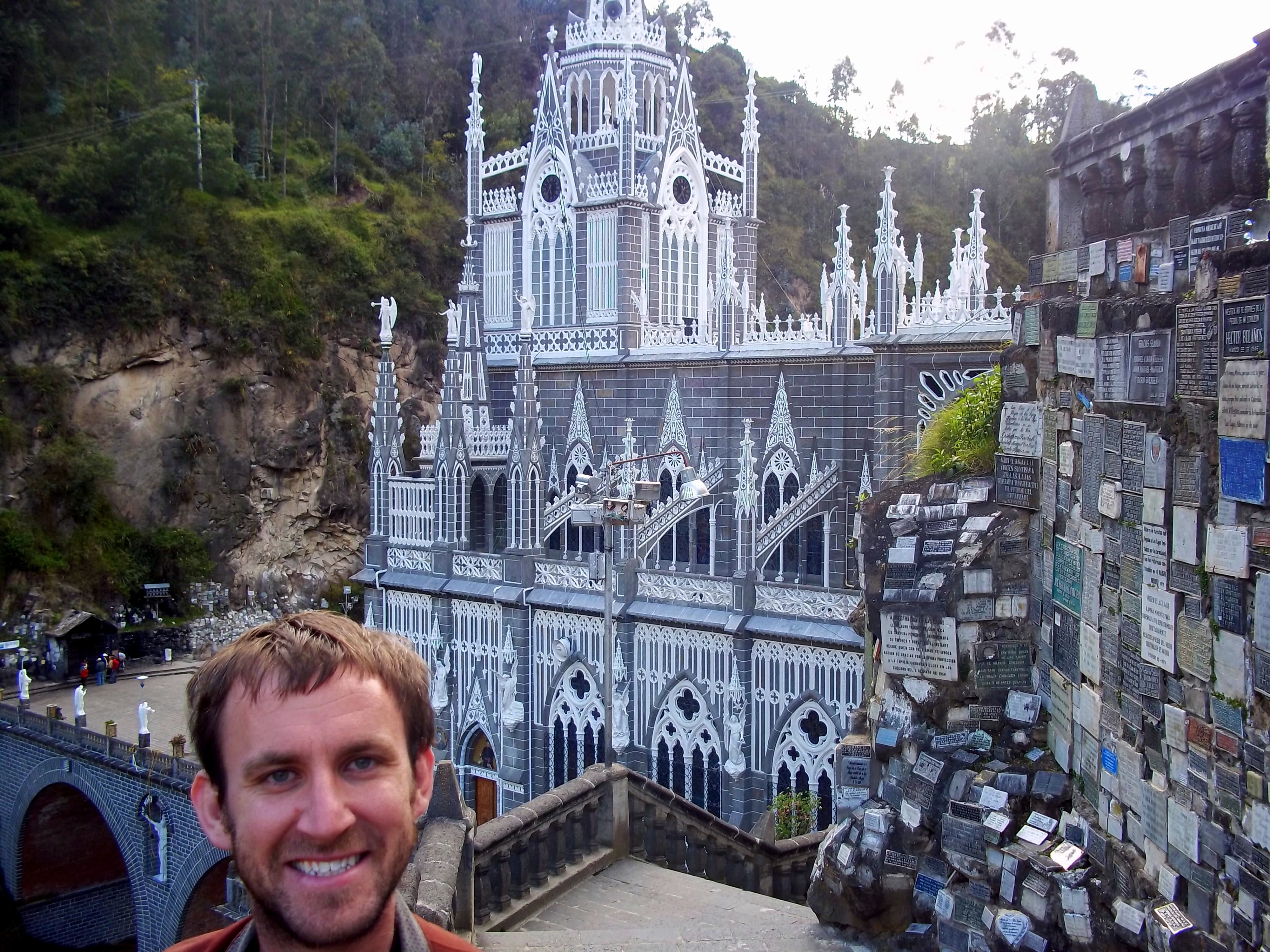
Ben surrounded by plaques to Virgin.
The architectural and natural beauty of this place was overwhelming. It was astonishing to see a neo-gothic church inside of a canyon. Of course the church was built this way for good reason. Allowing the focal point of the church’s chapel to be the rock face where the image of the Virgin is located and can be seen today.
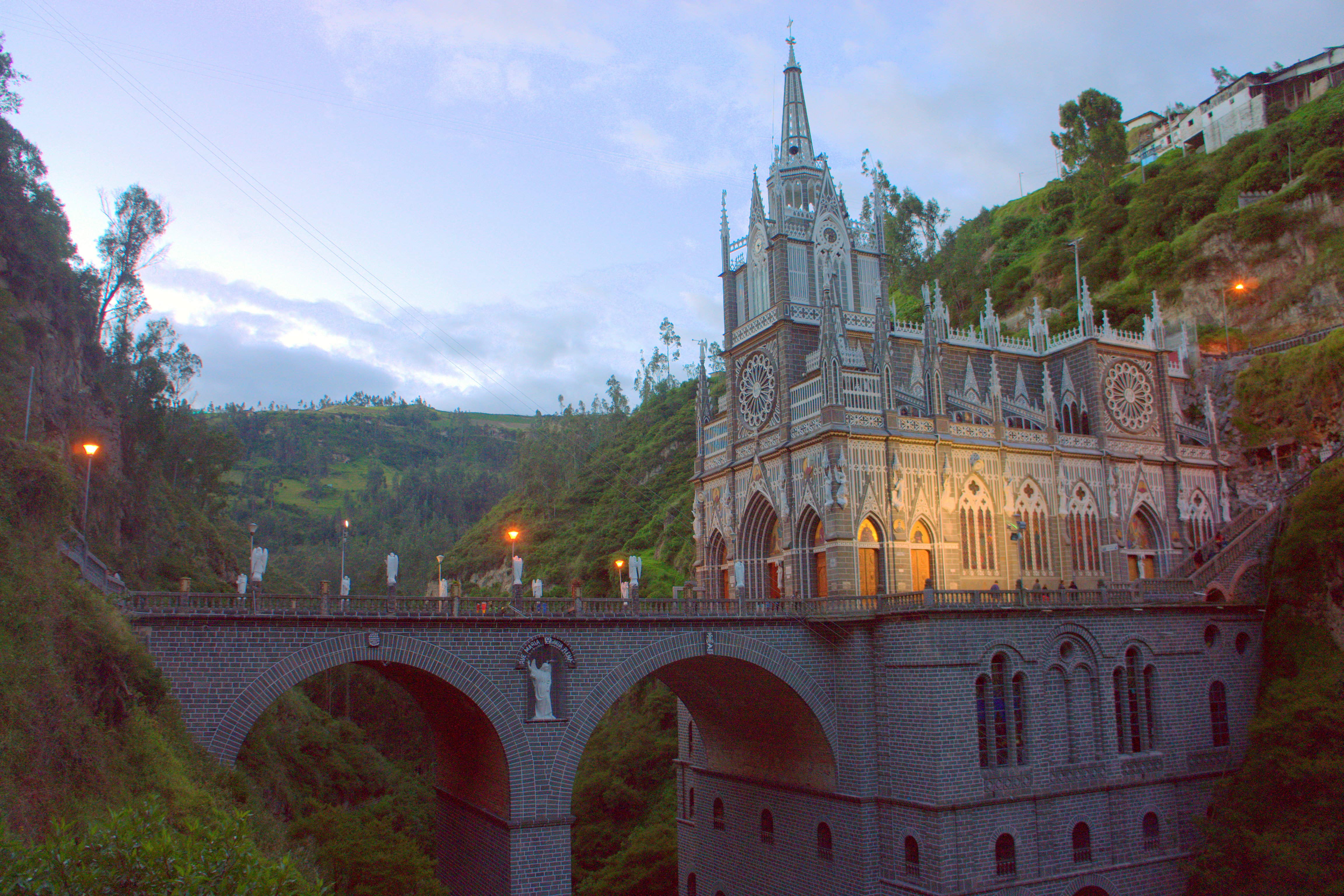
This church is built out of the side of a canyon!
We could not stop taking pictures. With every new angle of the camera came a new delightful perspective of this seeming supernatural place.
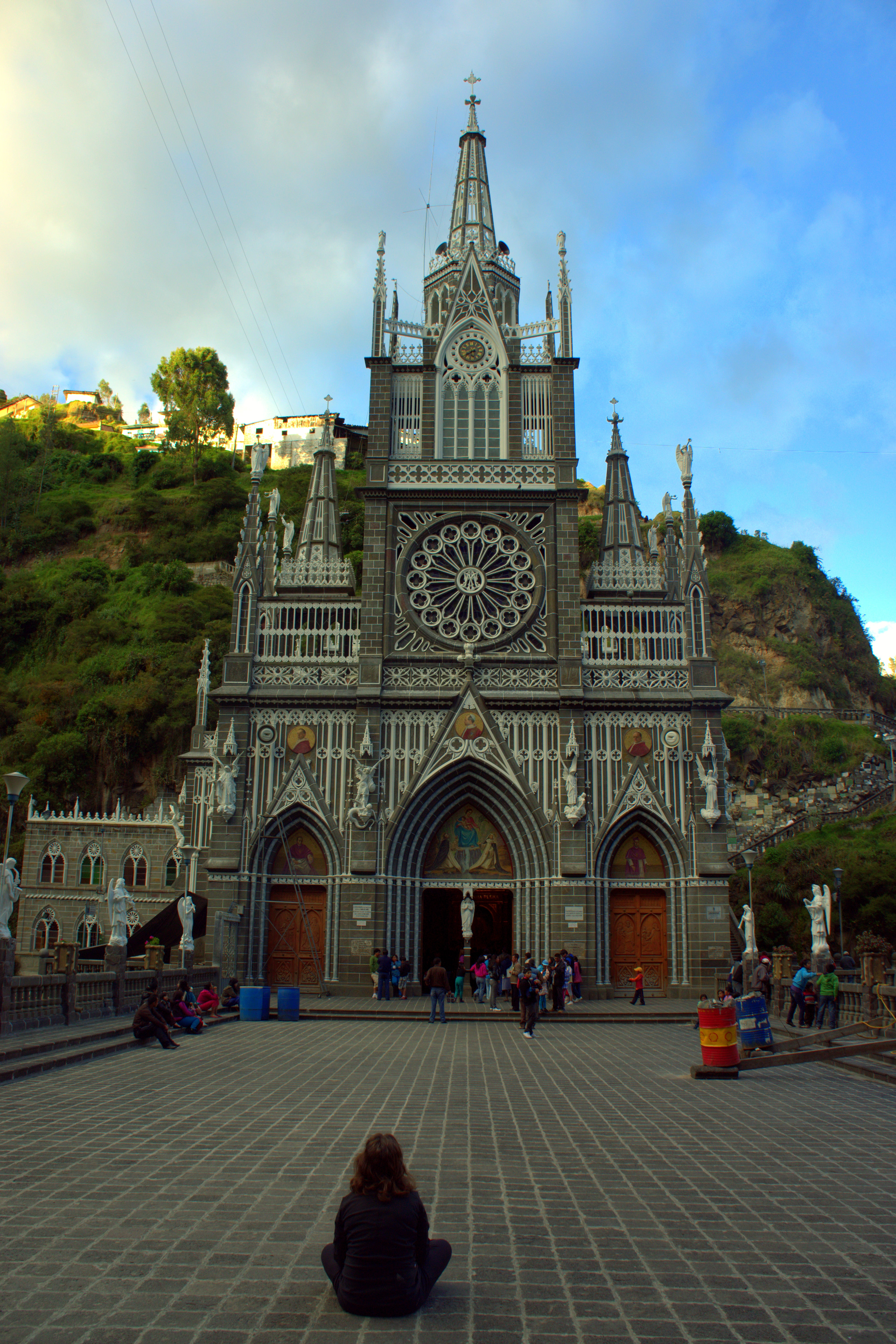
Taking it all in. Me sitting in front of the church.
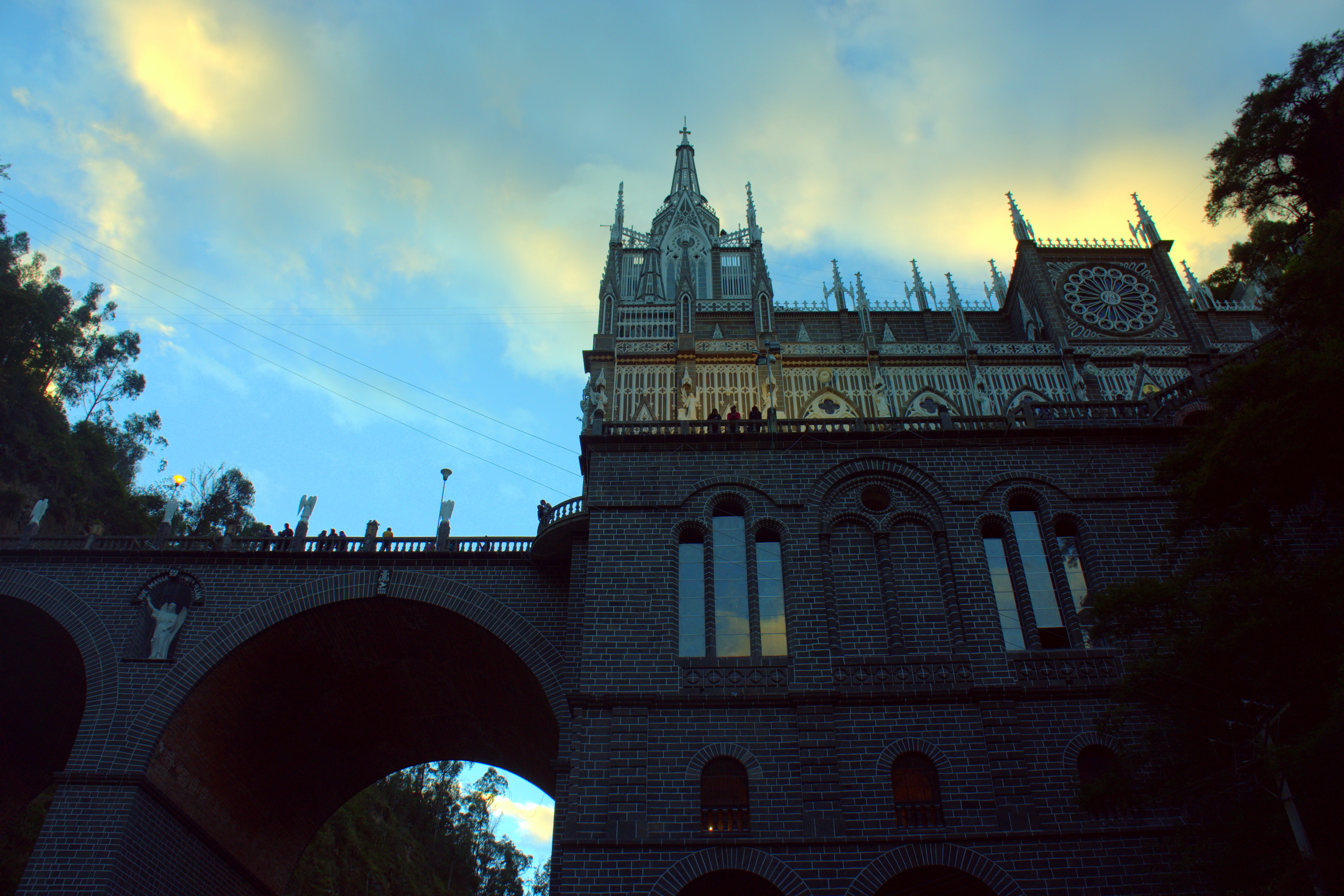
Such a surreal site. Looking up at the church from the banks of the river below.
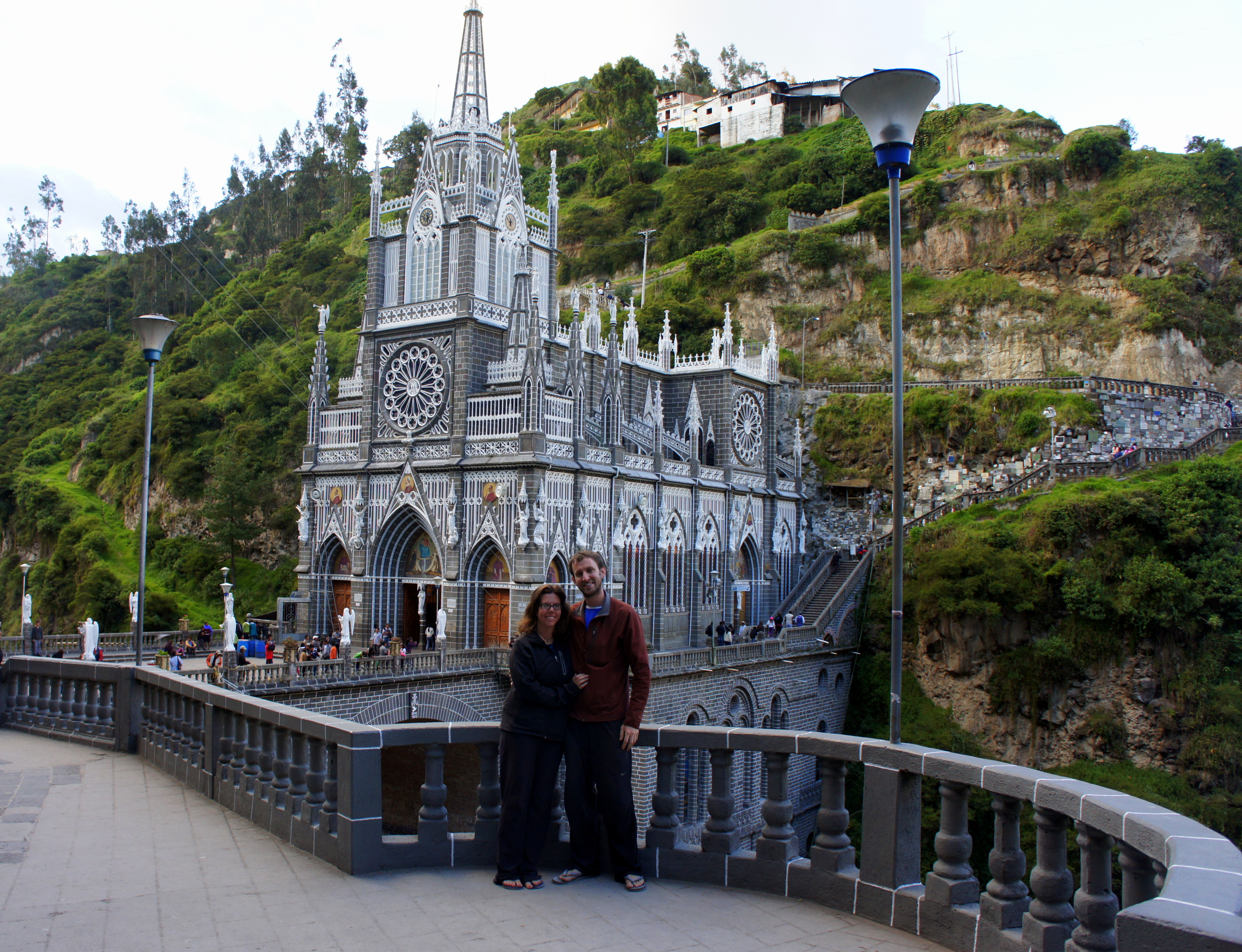
A very popular place for the tourists to take a picture.
Not to be out done by the exterior of the church, the church’s chapel is just as magnificent. It’s high arched ceiling donned with chandeliers and surrounded by stain glass windows and white gold gilded columns. The altar’s walls, contrastingly different from the rest of the chapel, are formed entirely from the natural grotto that contains the Virgin’s image.
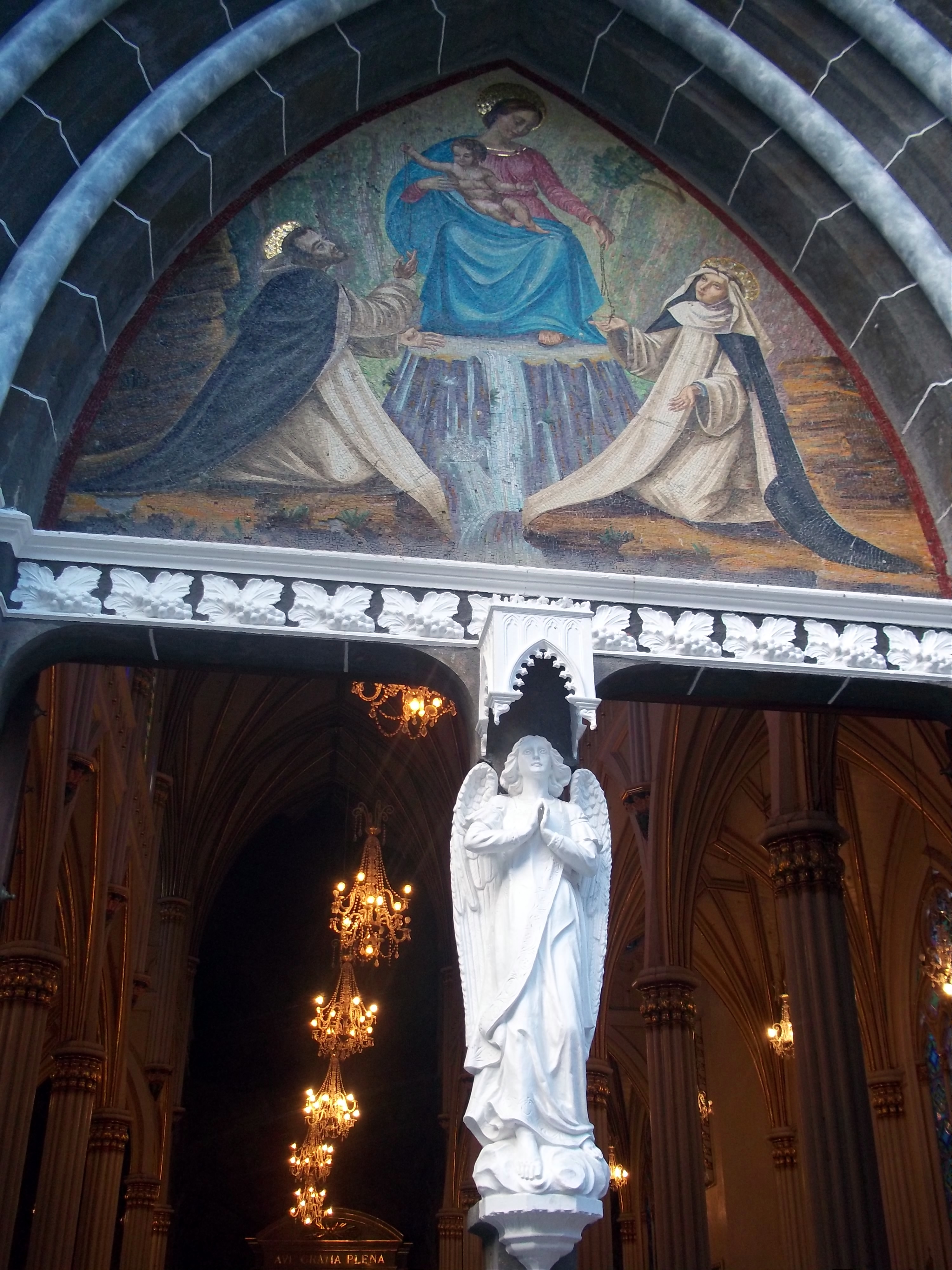
Entering the chapel of Las Lajas.
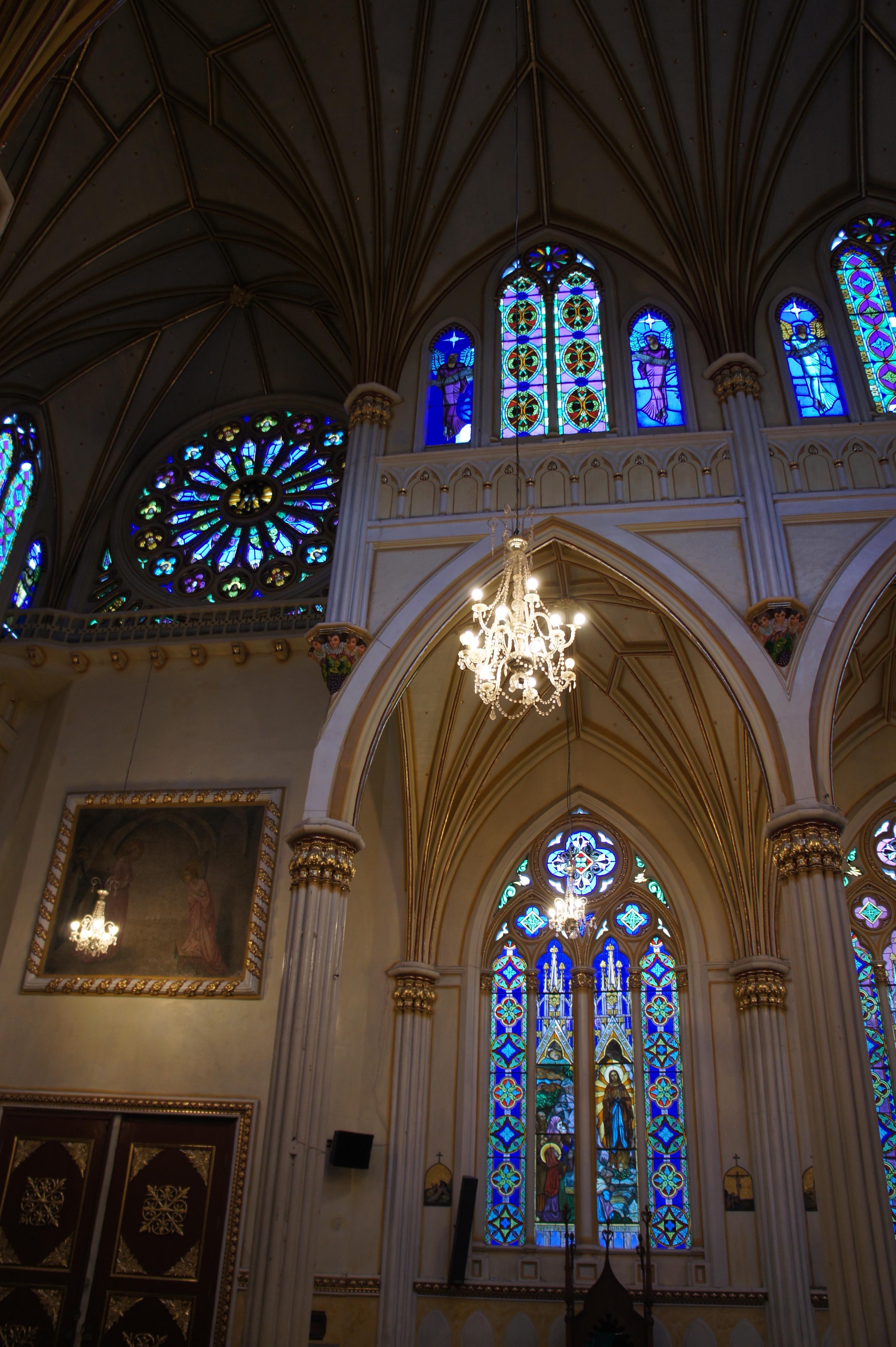
Inside Las Lajas.

I just could not stop taking pictures!
We arrived after mass. There were throngs of people pushing their way to the altar. All wishing to be anointed by the priest with splashes of holy water. It was quite the frenzy but we did manage to take a few good photos of the fabulous image that has spanned centuries without losing it’s brilliance.
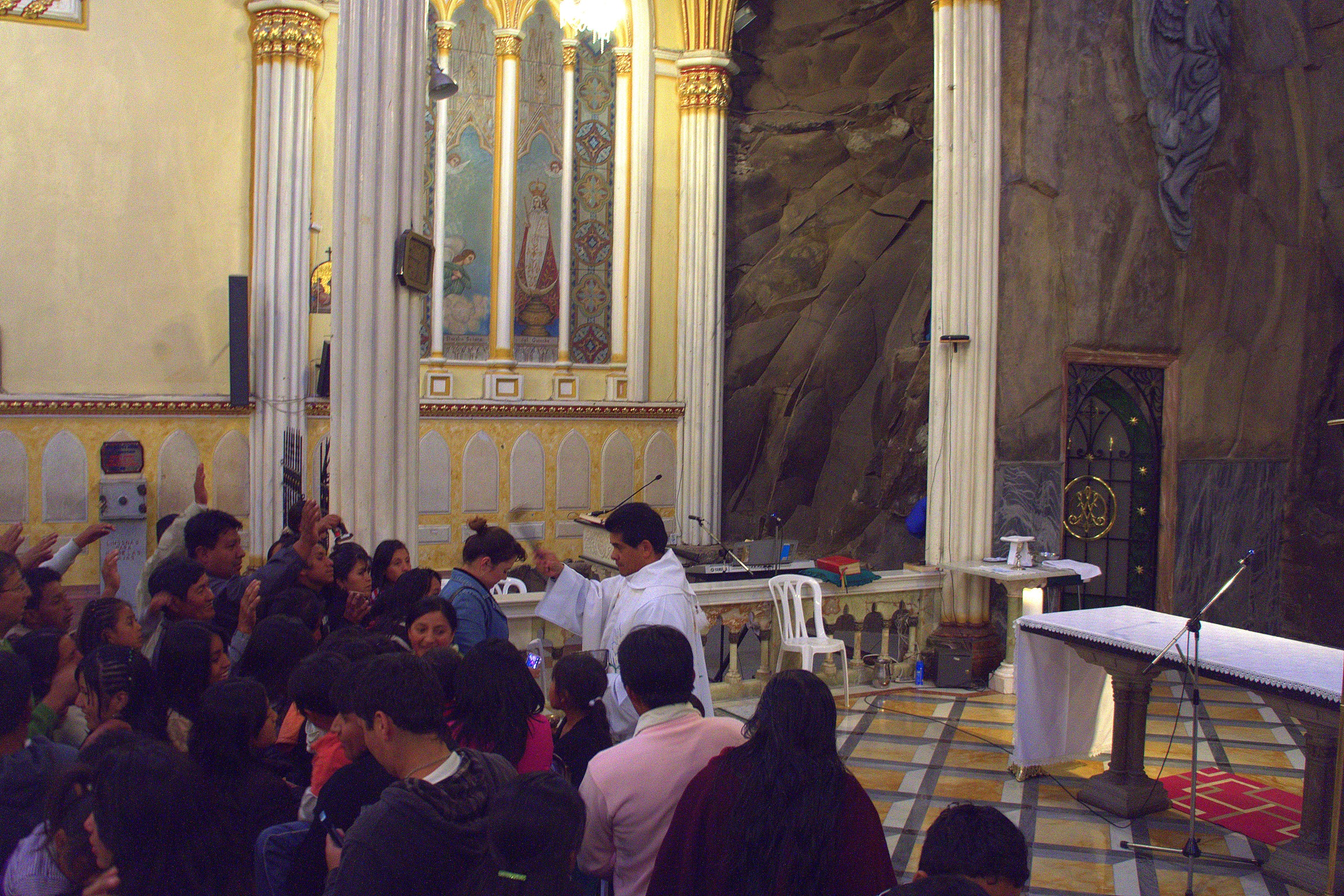
The priest sprinkling holy water from the river below on the crowd.
The image’s colors are so vibrant and exquisite in detail that Ben and I thought we were looking at a fresco painting done on the face of a cliff after the apparition was seen. Only later did we find out the image’s colors are of the rock itself and not of paint or pigment. Even more incredible, the rock is perfectly colored to the depth of several feet according to German Archaeologists who bore core samples from several spots in the image when the church as finally completed in 1949.
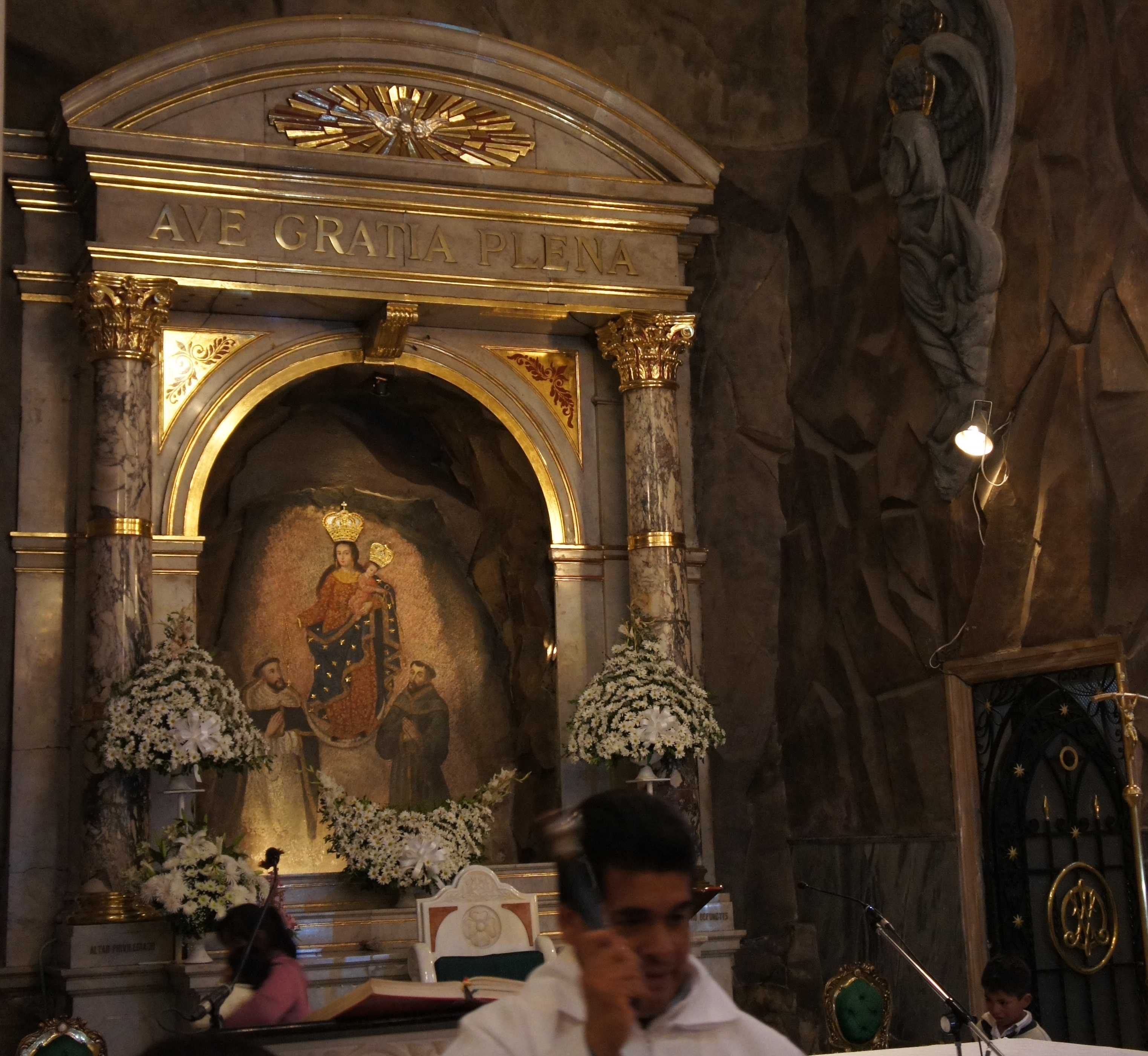
The magnificent image divinely bore into the rock.
The image was not made of human hands, and scientist and historians are still at a lost to explain it. There is no natural geological cause where nature reproduces human faces with such perfection. It may forever remain an enigma.

A close up of the whole image found high up on the grotto wall hundreds of years ago. It looks like a painting but there's no paint. The image is the color of the rock itself.
The Apparition Story:
The image was found after a miraculous event in 1754. When a Native American named Maria was journeying to Ipiales with her deaf-mute daughter, Rosa. Weary from the trek Maria stopped to rest at a place called Las Lajas (the Rocks) while her daughter went to play. Soon Rosa emerged from a grotto shouting “Mama! There’s a women in here with a boy in here arms.” Shocked from hearing her daughter speak for the first time and frightened because of the rumors that the grotto in Las Lajas was haunted, Maria grabbed Rosa and left quickly for Ipiales without seeing the figures the girl was talking about.
No one believed Maria’s recount of what happened, but as news spread of the event spread. Some asked if perhaps is was true. After all, the child could now talk.
A few days, later Rosa went missing. Maria guessed that Rosa went back to the cave. Often the girl would say that the lady was calling to her. Maria ran to Las Lajas to find her daughter in front of a noble Lady and playing affectionately with a Child. Maria fell to her knees. She had seen the Blessed Virgin and the Divine Infant.
Maria and Rosa keep what they saw a secret but often went to the cave to place flowers and light candles. One day Rosa fell ill and died. Maria took Rosa’s body to the cave to ask the Lady to restore her life. The Virgin moved by the sadness of Maria, obtained Rosa’s resurrection from her Divine Son.
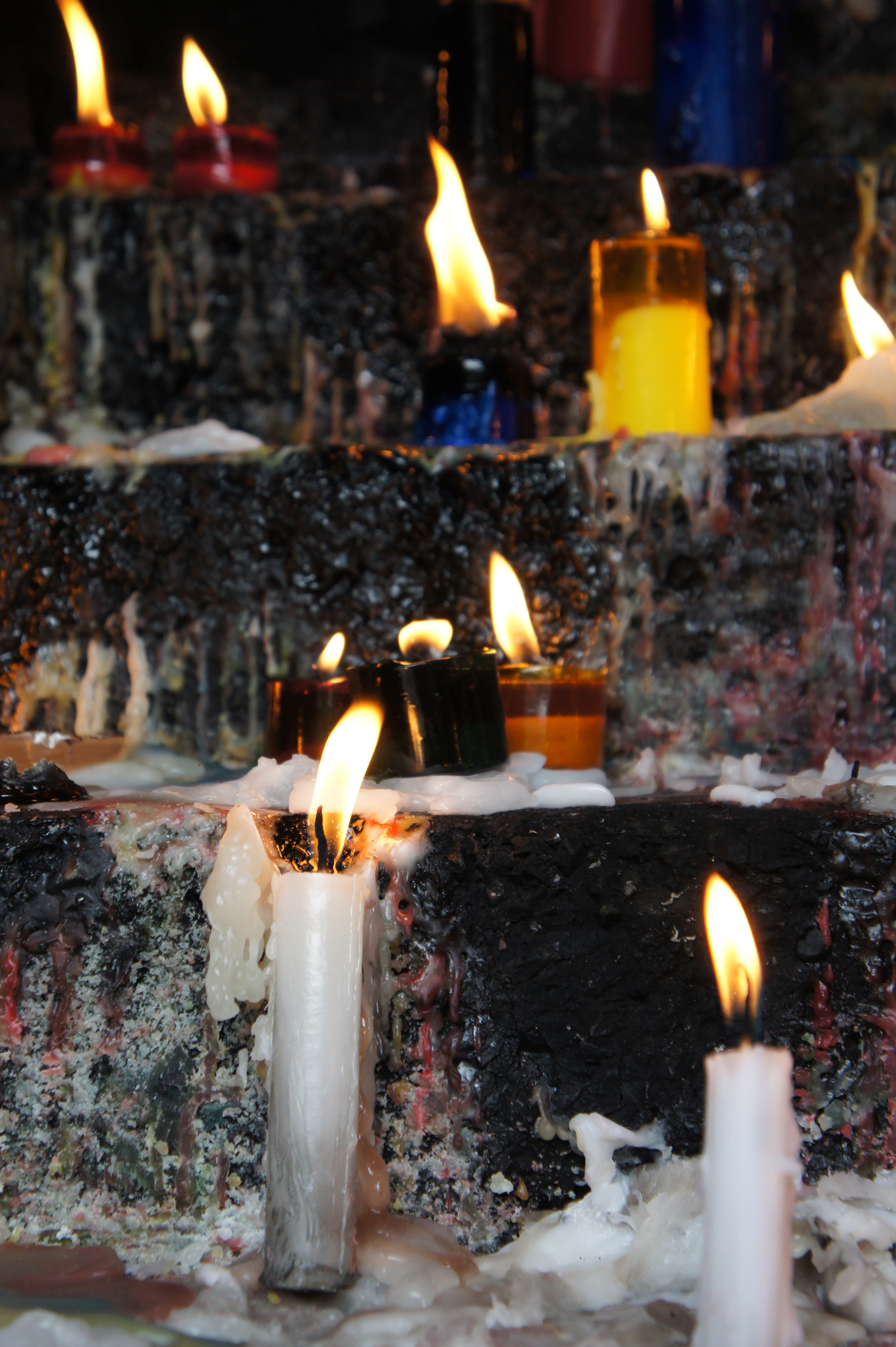
Candles are alway burning bright for Our Lady of Las Lajas.
Maria overjoyed that Rosa was saved returned home. It was not long before everyone in the village saw that Rosa was alive. The next morning a crowd gathered at the grotto at Las Lajas.
It was then that the marvelous image of Our Lady was discovered. The image is of a young woman of Latin American decent. The child Jesus is in her arms. On one side is St. Francis and on the other St. Dominic, the founders of the two orders that first evangelize Colombia and who Colombians have always had a special devotion. The two-dimensional crowns of metal were the only things added to the image later by devotees.
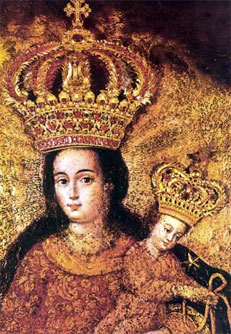
A close up of the virgin and the child in the image. The details on the rock are impressive. The crowns were added later
picasaView plugin: Could not load data from picasaweb. Maybe the user or specified album does not exist?
This was the generated url which failed at picasaweb:
http://picasaweb.google.com/data/feed/api/user/wolfgramb/album/20110825LasLajasColumbiaBeautifulChurch?kind=photo&thumbsize=144u&start-index=1It returned the following data:
Error 404 (Not Found)!!1
404. That’s an error.
The requested URL /data/feed/api/user/wolfgramb/album/20110825LasLajasColumbiaBeautifulChurch?kind=photo&thumbsize=144u&start-index=1 was not found on this server. That’s all we know.
Thank you for posting, really beautiful church and post.
Mark 4:12
“That seeing they may see, and not perceive; and hearing they may hear, and not understand; lest at any time they should be converted..”
Did you find that your faith increased? or if you did not believe before you do now?
Hi Maggie,
I’d glad you enjoyed our post! Yes, it was a spiritual place. It reminded us of the common bond we shared with the local people, even though we lived so far away from them.
I believe fervently in my ‘Blessed Mother & Her Divine Son’
I’m living today because of the amazing miracle she worked in 1954.
I was terminal expected to pass away any moment…and here I’m, after 5 children and a healthy strong life of very hard work!
She is my Divine Mother, My life saver…She steps in every time for me, She is my ‘Special Angel’.
Thank you for sharing this story, partially your story, of the Lady of Las LaJas. Very interesting, indeed. I often wonder when God’s people will awaken to the wonders of Immanuel, God-with-us .. and to the gift He has given us of his .. and our .. Blessed Mother. May she inspire every facet of you life, Leah. In my life the issue is allowing her maternal love to bear in upon my life: what I mean is .. having the trust in her love, so that I might allow her to guide my way .. which ultimately leads to her Son. Once again, many thanks!
Our Blessed Mother is always in our lives on a daily basis, she guides each and every step we take. We may not see her working her miracles, however, they are done in a way that is good for us.
These were wonderful photographs of Our Lady, The mother of Jesus Christ. I pray to her daily although I am not a Catholic, but the religion next to Catholism, Anglicanism, She listens to my prayers and I am sure she is keeping me and my family safely that one of these days we will meet her and Our Father and our Saviour Jesus Christ in the Spirit in HEAVEN. Thanks be to God. Amen.
What a beautiful experience. The Blessed Mother has been heaven’s ambassador for over 2,000 years, but still many Christians deny her. Why hasn’t the story of this apparition been listed with that of Lourdes, Fatima, and Mejugorja? She is the mother of Our Lord, and the mother of the world, if only we would listen.
Mavis
I say the Rosary every day. It is the most powerful prayer. It can move mountains if you truly believe that The Blessed Mother will help you. Her Son crowned her Queen of Heaven. I pray for all my family and I know she hears my every prayer.She is the Mother of Jesus Christ and also our Mother. The entire world need to listen to her. She has been warning us for centuries. I wonder when we will all listen to her.
First time I’m hearing about this place!! Awesome! Thanks to my friend Babara Khoo for emailing. I’m in Malaysia, definately I shall email this to all my relatives & friends!
TQ dear Mother Mary always revealing your Son’s love for us, & bringing us closer to Our Almighty God.
Our Lady of Lajas, pray for us.
Thank you posting. It has strengthened my faith and love for our Blessed Virgin Mary
Absolutely breathtaking.
Wow this is very hard to believe however nothing is impossible to God
Thank you Leah – beautiful story and photos – may you enjoy the blessings of Our Mother Mary and her son Jesus.